
QuSoft celebrates five years of cutting edge research on quantum algorithm and software development

Since 2015, QuSoft has grown into a leading research institute where over 60 scientists of the Dutch national research institute for mathematics and computer science (CWI) and Faculty of Science from the University of Amsterdam (FNWI) work together on fundamental and multidisciplinary quantum research. After five years, director of CWI, Jos Baeten and Peter van […]
Harry Buhrman installed as a new member of the Royal Netherlands Academy of Arts and Sciences
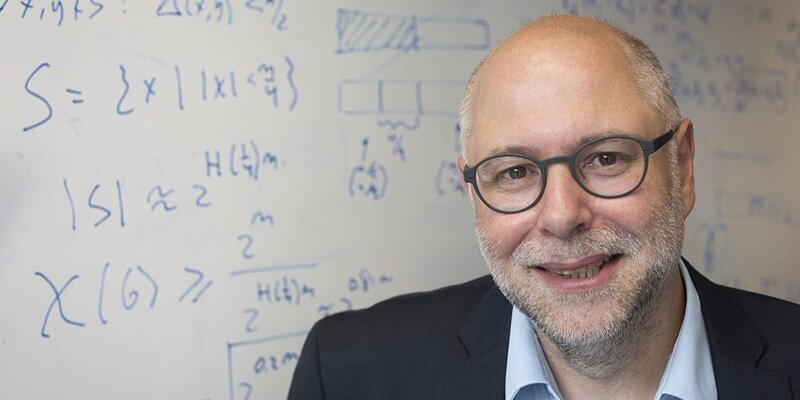
Today, together with seventeen other researchers, Harry Burhman was installed as a new member of the The Royal Netherlands Academy of Arts and Sciences (KNAW). Academy members, leading researchers from across all disciplines, are selected for their scientific and scholarly achievements and are appointed for life. Buhrman is a pioneer in the promising field of […]
Jana Sotáková wins best paper award at CRYPTO 2020
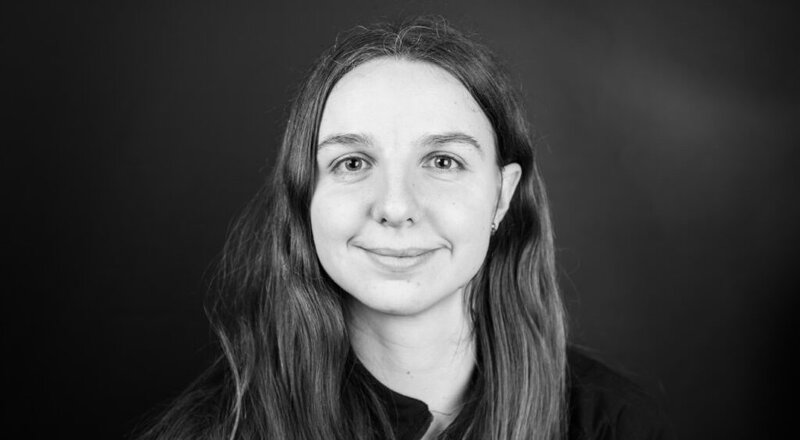
Jana Sotáková, PhD student at QuSoft and UvA, won the best-paper award at the IACR flagship conference CRYPTO 2020 for her article “Breaking the Decisional Diffie-Hellman Problem for Class Group Actions Using Genus Theory”. Jana works on post-quantum cryptography, which is the field designing and evaluating protocols that would replace the encryption that we use nowadays with ones that are […]
Quantum.Amsterdam is live!

QuSoft, national research institute for mathematics and computer science (CWI) and The University of Amsterdam (UvA) have jointly established a new innovation hub for developing quantum software and applications. The Quantum.Amsterdam hub aims to connect the ambitions of leading knowledge institutes and industry partners. Today they have launched their new website. Have a look at it out yourself! The main purpose of Quantum.Amsterdam is […]
New lectorate Applied Quantum Computing

CWI and the Amsterdam University of Applied Sciences jointly establish a new special lectorate in Applied Quantum Computing. The lectorate supports the quantum software institute QuSoft in bridging the gap fundamental quantum research and quantum applications. The new lectorate facilitates QuSoft in exploring which quantum computing applications are feasible in the future. It will study […]
Harry Buhrman joins Royal Netherlands Academy of Arts of Sciences

Quantum researcher Harry Buhrman joins the Royal Netherlands Academy of Arts and Sciences (KNAW). The KNAW is the most relevant Dutch society of top scientists. Together with seventeen other researchers, Buhrman will be installed as a new Academy member on September 14, 2020. Buhrman is affiliated with the CWI and the University of Amsterdam. He […]
PhD defence of Koen Groenland on 17 January

QuSoft researcher Koen Groenland will defend his PhD thesis ‘Quantum protocols for few-qubit devices’ at the University of Amsterdam on 17 January. His work was recently highlighted by CWI. For more information click here.
New article published in Nature Communications

Cryptographic protocols are the backbone of our information society. In this work, we implement such a protocol which allows two parties Alice and Bob to compute a function together so that even if Alice tries to cheat by deviating from the protocol, she cannot learn Bob’s inputs and vice versa. A famous example of such a scenario is Yao’s […]
Projectruimte grant for Rene Gerritsma

QuSoft congratulates Rene Gerritsma, affiliate researcher of QuSoft, for receiving an NWO Physics Projectruimte grant for his research of trapped ions in optical micro-traps. Trapped ions rank among the best quantum computers to date, but scaling them up to a large number of quantum bits turns out to be hard. In this project, the researchers […]
New attacks on location-based quantum cryptography

For secure communication of classified information, researchers want to deploy the sender’s location, so a receiver can be sure that a message is, for instance, really coming from the White House. Classic location-based methods are shown to be unsafe but location-based quantum cryptography seemed to have a chance. In 2014 researchers demonstrated that this method […]
