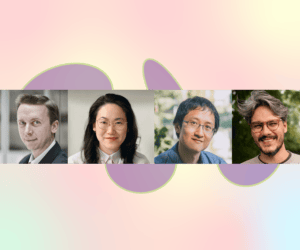

Last week, Amsterdam welcomed the global quantum community for QSim 2026, the premier international conference on quantum simulation.
Hosted at the University of Amsterdam’s Roeterseiland Campus, the event brought together leading experimentalists, theorists, computational scientists, and industry representatives to explore the latest advances in the field. As experimentalists gain unprecedented control over quantum particles and hardware scales past hundreds of qubits, the conference captured a pivotal shift: moving from basic machine demos to practical utility.
Why quantum simulation
Simulating complex materials—like superconductors, novel transistors, or catalysts for green energy—is notoriously difficult because quantum mechanics governs their behavior. Quantum simulation means using programmable quantum systems (both analog and digital) to mimic and explore these exotic systems directly. This requires both experimental and theoretical efforts, making QSim a unique cross-disciplinary meeting ground.
“Maintaining a good balance between experiment and theory has always been a priority for QSim, and I’m very happy that this is clearly reflected in the program again.” — Kareljan Schoutens, QuSoft co-founder and QSim 2026 Steering Committee member
Important advancement: closing the theory-experiments gap
A central theme of the conference was the steady reduction in theoretical resources required to run useful chemistry and physics simulations on quantum hardware.
“In the beginning, experimentalists said ‘we can make 1 qubit and that is a big deal,’ while theorists said ‘we need a million or more.’ Today, as algorithms become more efficient and hardware scales from dozens to hundreds of performant qubits, those two worlds are finally meeting.” — Kareljan Schoutens
Key technical results highlighted at the conference included:
- FeMoCo and Resource Estimation: Guang Hao Low (Google Quantum AI) addressed the resource bottleneck for simulating nitrogen fixation catalysts like FeMoCo. What once required impractically large systems can now be targeted at under 100,000 qubits with a compute time of roughly one month, demonstrating how algorithmic optimization reduces hardware requirements for real-world applications.
Classical Polynomial Speedups: Garnet Chan (Caltech) argued against treating exponential speedup as the sole benchmark for value. Improving classical simulations by significant polynomial factors—such as modeling particle-hole quasiparticle excitations—can yield immediate practical utility.
Unified Benchmarking: Katherine Klymko (NERSC) introduced HamLib, a standardized library of Hamiltonians developed at Lawrence Berkeley National Laboratory, intended to create fair benchmarks across competing computational platforms.
Hardware Execution: Johannes Zeiher (LMU Munich) presented experimental setups where neutral atoms interact while moving at constant velocity across a sequence of qubits, avoiding the time overhead of repeated stopping and starting.
Applications & Impact: Presentations by Nikolaj Moll (Boehringer-Ingelheim) and Jeffery Yu (University of Maryland) showed how these algorithms are already being applied to drug design and nuclear reactor modeling.
Plenary Panel insights
The plenary panel—featuring Garnet Chan (Caltech), Monika Schleier-Smith (Stanford), Barbara Terhal (TU Delft), and Johannes Zeiher (LMU Munich), and moderated by Kareljan Schoutens (QuSoft, UvA) and Arghavan Safavi-Naini (QuSoft, UvA) —tackled foundational questions about simulation methods, AI integration, and scientific rigor.
Beyond the platform race
Panellists emphasized moving away from viewing quantum development as a winner-takes-all platform war between architectures (e.g., neutral atoms vs. trapped ions vs. superconducting qubits vs. photonics). Rather than committing exclusively to a single architecture, the community benefits from an open approach where diverse platforms inform and validate one another.
What is quantum simulation actually for?
Exploring Emergence: Monika Schleier-Smith noted that quantum simulation has value beyond solving specific computational problems: “Not necessarily simulate to solve a specific problem, but think of it as a way of exploring new emergent phenomena that can arise when one has many interacting particles that behave quantum mechanically.”
Inaccurate Experiments: Barbara Terhal pointed out that simulations provide a valuable check on physical lab work: “Experiments can be messy and make us ask: how do we get reliable data? And how reliable is that data? I hope that quantum simulation will teach us to do better experiments and understand the errors we get in the data better.”
The role of AI in research
The debate over AI skipped the standard corporate optimism and went straight to the risks in education and research integrity:
Generative speed vs. critical thinking: Garnet Chan highlighted the strain on early-career researchers: “Students are using AI a lot… We could use some results, but the students don’t understand how they were made. Students cannot keep up with the pace.”
Blind trust & scientific rigor: While panellists noted a growing tendency among students to accept generated outputs without scrutiny, they maintained that core scientific principles endure. As Barbara Terhal observed: “Tools are important and AI is a very useful tool. At the same time, the moral principles of critical honesty and persistence remain the same… So the situation is not completely different besides having a very powerful tool. We should integrate it to the extent that it is advantageous to us.”
Practical utility vs. creativity: Schleier-Smith noted AI’s value for non-theorists managing code details while raising a crucial caveat: “In the lab it’s great as it’s making the experiments go faster. A big challenge is: where do you let AI think for yourself, especially in learning? How do we make sure that we are still learning to think for ourselves, which we need to do to come up with new creative ideas?”
Hype and advantage claims
Addressing frequent claims of “quantum advantage” that are disproven shortly after publication, the panel advocated for market-driven accountability rather than broad supremacy assertions:
Open challenges: Terhal suggested companies back up claims directly through open competition: “If they want to make their claim, let them claim… It would be great to have more competition. As a company, you could put up an internal competition before publishing a paper.”
The role of fault tolerance: Chan noted that the issue will naturally resolve as hardware evolves: “It will just go away when fault-tolerant quantum computing happens.”
Foundational physics and gravity
When asked if simulators could tackle foundational questions like the measurement problem or quantum gravity, panel responses were cautious but optimistic. Schleier-Smith highlighted the potential of testing theoretical gravity models in laboratory settings:
“I am intrigued by the idea that quantum simulators might be able to teach us something about quantum gravity. Broadly, there is this idea that gravity is perhaps an emergent phenomenon where building blocks are quantum mechanical, described by entanglement and quantum many-body systems. Theorists write down models to describe systems, but which parts of those models are essential to get something that looks like gravity and can be testable in the lab? I think that’s a great space for quantum simulators to explore.” — Monika Schleier-Smith
Looking ahead
Reflecting on the overarching message of the conference, Kareljan Schoutens reiterated that academia and industry must work side by side:
“It’s really important that there is lots of communication between academia and companies. Scientists can really use the best available quantum computers from the companies, and the companies get a lot of inspiration from the scientists on how to use and build their machines.” — Kareljan Schoutens
When pressed by moderator Arghavan Safavi-Naini on their vision for the next decade, the panellists reached a clear consensus: whether simulating quantum gravity, optimizing nuclear fission reactors, or designing fine-tuned drug discovery pipelines, the future lies in open, multi-platform collaboration.